Deck the Halls!
Meaning: to decorate with ornaments…
Written by Arlene Stein, Founder Terroir Symposium
The original lyrics to this classic Welsh carol, written by Thomas Oliphant in 1862, went like this:
Fast away the old year passes
Hail the new, ye lads and lasses!
Laughing, quaffing all together…
Imbibing during the darkest month of the year has a long history, anchored in our desire to get through the most miserable stretch of winter through festivities and community.
December is my favorite month of the year because, even though it is dark and cold, the lights, ornaments, and festivities brighten the dimmest corners of our hearts. People come together to wait for the return of the lighter days. It gives us something hopeful to hold on to.
This year, November 30th marks the start of Advent - the four Sundays leading up to Christmas. Additionally the festive season includes the ‘Twelve Days’ (or Nights) of Christmas, the mystical stretch between the winter solstice and the new year, known in Germany as the Rauhnächte*. It is followed by Epiphany in Western Christianity and, soon after, Orthodox Christmas, or simply the symbolic return of light. I digress, but it is worth noting that these practices predate all the Abrahamic religions and have their origins in Celtic and Germanic traditions, which many would call pagan.
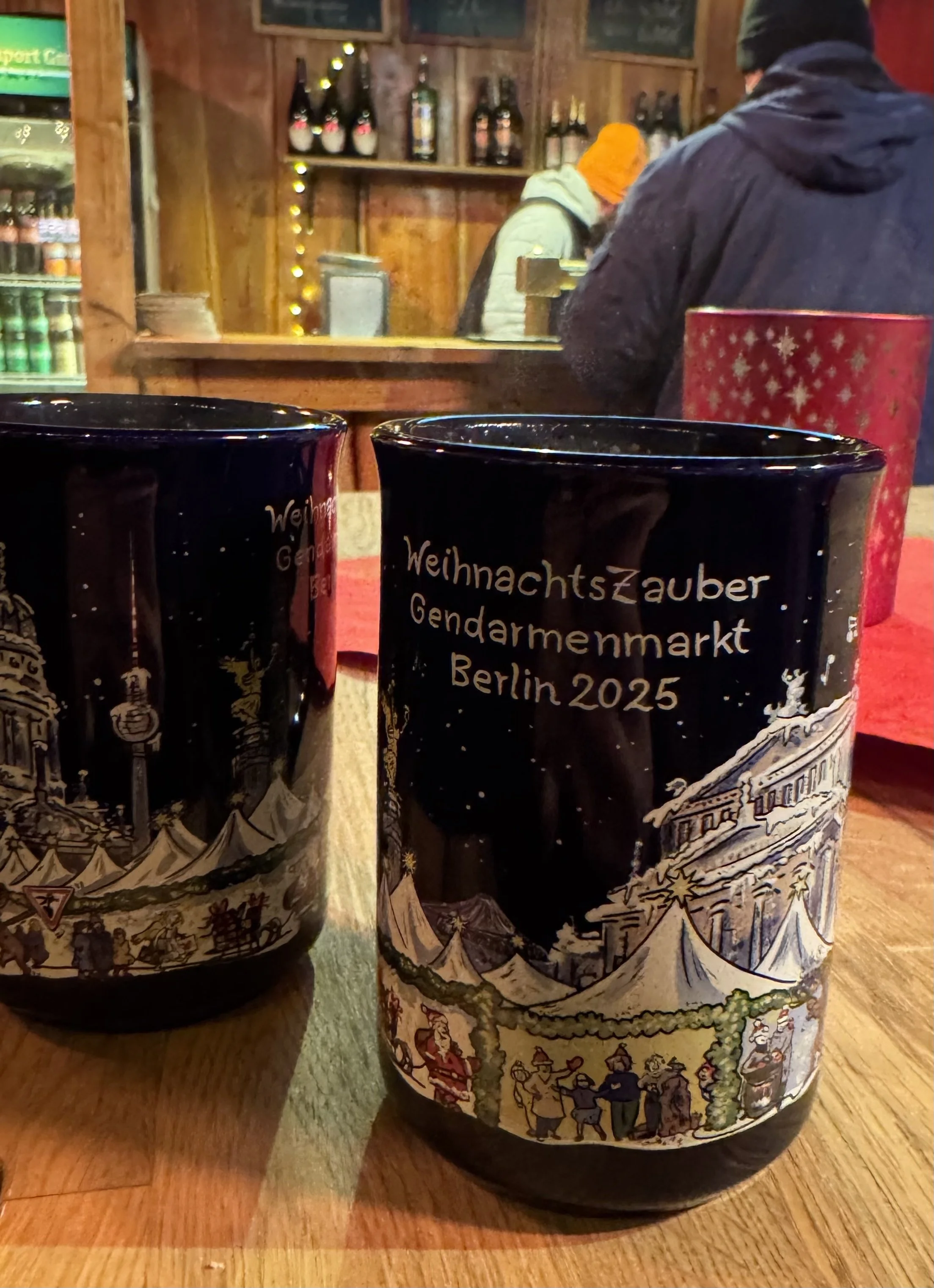
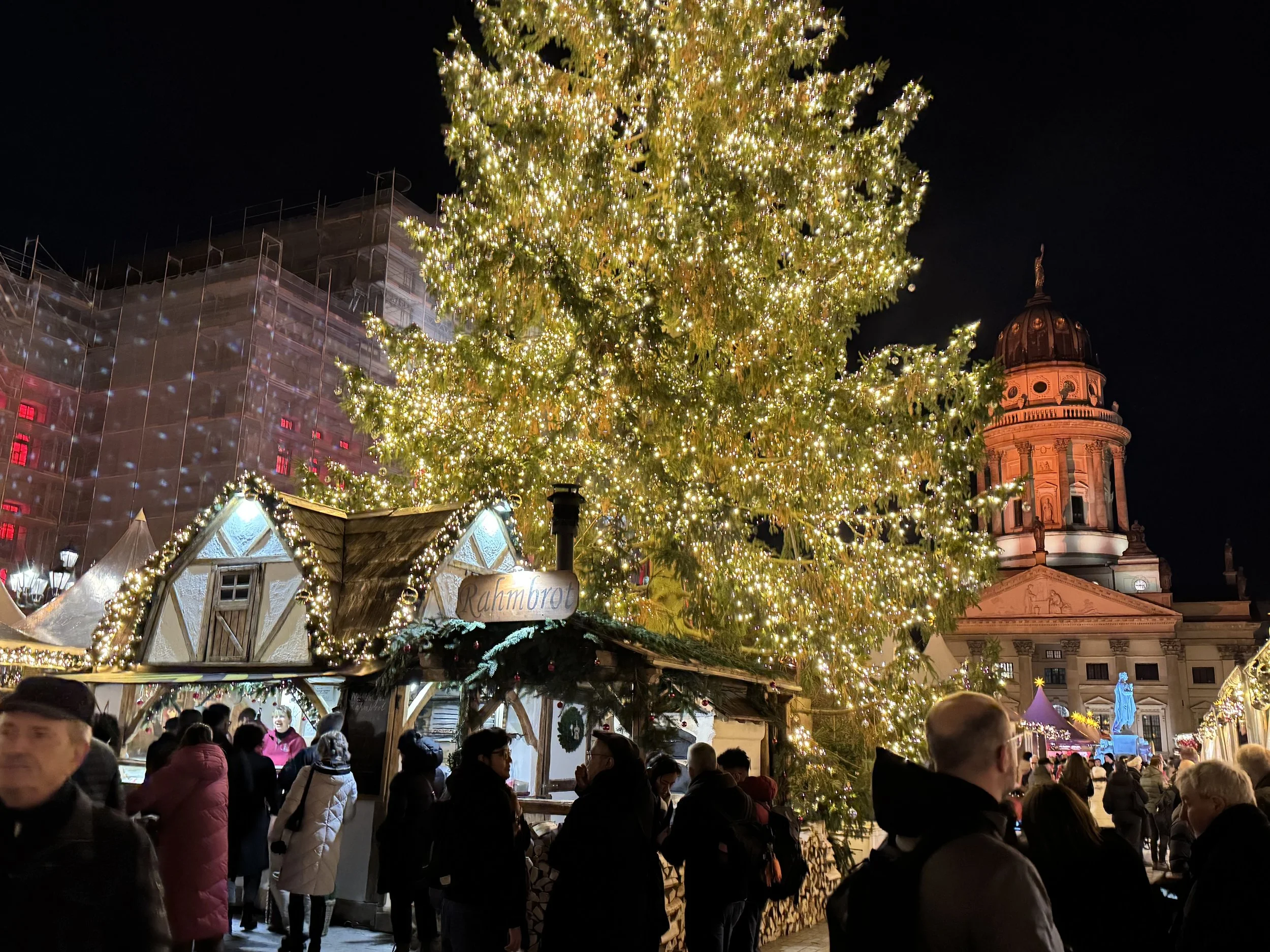
For me, Advent marks the beginning of 30+ days of Christmas markets and Glühwein, which literally translates to "glow wine," or in my case, happy, warm wine.
The origins of warm, spiced wine trace back to ancient Rome, where a honeyed mixture was likely used to mask the harsh flavours of their wine. The Romans, of course, brought this beverage north into the so-called 'barbaric' lands as they conquered the region known as Germania. There, it took hold and eventually became a cultural marker of our holiday traditions.
But wine as a cultural symbol of celebration has an even older and more universal story, deeply entwined with religion and ritual. The most famous example is Jesus's inaugural miracle at the wedding at Cana, where he turns 120 gallons of water into wine, at his mother's request, so the guests could be satisfied and the party could continue**.
Wine has an ancient history in Jesus's homeland, stretching across what we now consider the broader Middle East, from the Levant to Azerbaijan. Georgia, in fact, claims to have the longest unbroken tradition of winemaking, almost 8000 years! Daily wine consumption there is rooted in hospitality, spirituality, and culture. Every supra, the traditional Georgian feast, is served with wine, which plays an essential role in the country's religious customs***.
It is fascinating to remember that the continuity of this tradition is linked to religion. Many regions surrounding Georgia, once prolific wine producers, reduced or abolished wine consumption due to religious prohibitions, particularly with the rise of Islam. Wine became a defining marker between Christian and Muslim culture, and in Georgia, preserving winemaking became an act of identity and continuity.
In Jewish tradition, families recite blessings over wine before the festive meals of Hanukkah to sanctify the holiday. Wine is a symbol of joy and celebration, elevating the significance of the moment.
The point is that religion offers a map for understanding how wine became a symbol of both culture and celebration, even in its absence, it can be a marker of ritual. These rituals guide how we gather, and they preserve meaning across generations. Food culture is often influenced by belief systems. We sometimes imagine religion (or belief) as abstract, but in practice, it can manifest in what ends up on our plates and in our glasses.
Advent marks the countdown to our darkest day, while Christmas is celebrated with feasts. Jewish festivals turn memory into meals. In Islamic cultures, where wine is set aside, creativity blossoms in fragrant teas, fruit syrups, and celebratory nonalcoholic ferments. Ritual is a way of marking time. It tells us where we are in the year and who we are within our community.
And lest we forget, long before scripture, prophecy, miracles, or messiahs, people watched the sky and learned that the sun, at its lowest point, around December 25th, would rise again. The winter solstice is the oldest festival of hope we have. A reassurance that the long night will eventually shorten. A reason to gather and give thanks for whatever the earth provided that year: hopefully an abundance of crops and, of course, wine.
These rituals, regardless of belief, share a common thread in December:
Light is scarce right now. Let's come together in hope and community while we wait for the earth to return to life.

What I cherish most about this time is, of course, the wine, but also the sense of togetherness that forms around it. Standing in the cold, looking forward to time with loved ones, we share a collective pause away from the pace of work and daily life. It is an essential modern marker in our calendar, reminding us of our humanity and the importance of gathering with others. And in a time when the world can feel painfully divided, our customs and rituals remind us that we are more alike than different.
I don’t believe in religion. But I do believe in people and in the stories we create to understand ourselves. I believe in gathering around tables, in the ancient comfort of warm drinks in cold weather, and in the courage of those who protect their food traditions through all circumstances. And I believe in the spark of hope that returns every winter when we notice the days growing just a little longer.
And so, here's to the rituals that remind us who we are and bring us together in community.
I wish you all a joyful holiday season, filled with your own special traditions.
Cheers to a wonderful December, and I hope you enjoy a steaming cup of Glühwein.
Source* Battle Merchant
Source** Bible Study Tools
Source *** UN Today
Glühwein Recipe
Warm a decent red wine (or even white wine) in a pot. Add a selection of spices—star anise, cinnamon, cloves. Pour into a mug, add a splash of rum for extra warmth, and a slice of orange. Easy.